How To Write Better AI Image Prompts
Writing a good AI image prompt isn’t really about learning a secret language. It’s about describing an image clearly enough that the AI image generator understands not only what should be in the frame, but how you want us to see it.
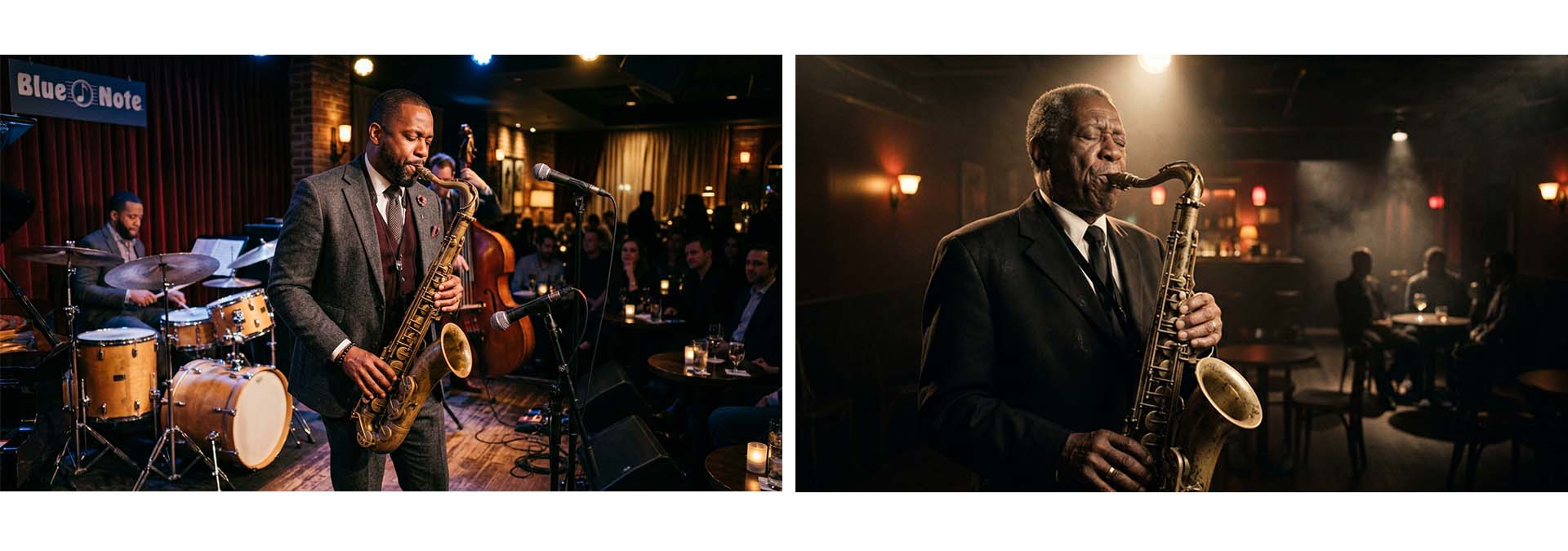
That distinction is important. A basic AI prompt might successfully describe a jazz musician playing in a club, but it leaves the AI image generator to make almost every creative decision for you. Where is the camera? Is it an intimate close-up or a wide establishing shot? What lens are we shooting on? Where is the light coming from? Is the musician separated from the background or surrounded by the audience? Does the image feel polished and commercial, raw and documentary, or like a frame pulled from a 1970s feature film?
These are the same decisions cinematographers and directors make when creating images for film. As cinematic filmmakers, we’re already used to thinking in the language of composition, focal length, depth of field, lighting, colour, texture, production design and visual storytelling. Increasingly, those same principles are what separate a generic AI image from one that feels deliberate and cinematic.
So rather than giving you a giant list of magic prompting words, we’re inviting you to follow along as we build one image from scratch. We’ll start simple, then progressively add subject detail, composition, lens choice, lighting, atmosphere, aesthetic and finally storytelling. At each stage, you’ll see not just what to add to an AI image prompt, but why that creative decision changes the image.
The aim isn’t to create the longest prompt possible. It’s to learn how to direct an image rather than simply describe one.
Ready? Ok then, we’ll start deliberately simple:
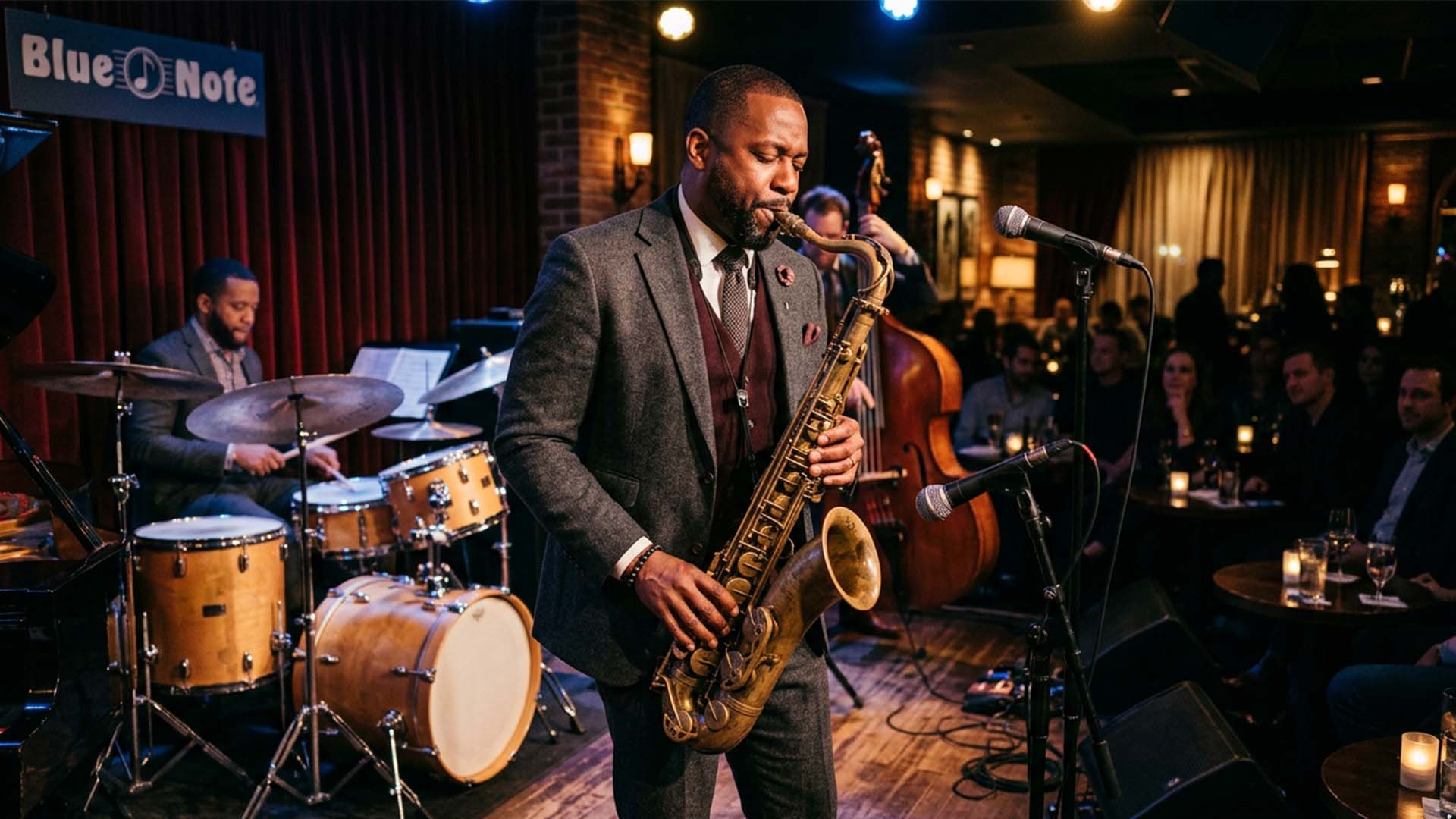
A jazz musician playing saxophone
There’s nothing technically wrong with that prompt. It’s given us a musician and a saxophone buuuut it looks a little like a stock photo. The problem is that we’ve handed almost every interesting creative decision over to the A image generator itself. So let’s start directing it.
1. Start with the subject and setting
First, let’s establish who we’re photographing and where they are.
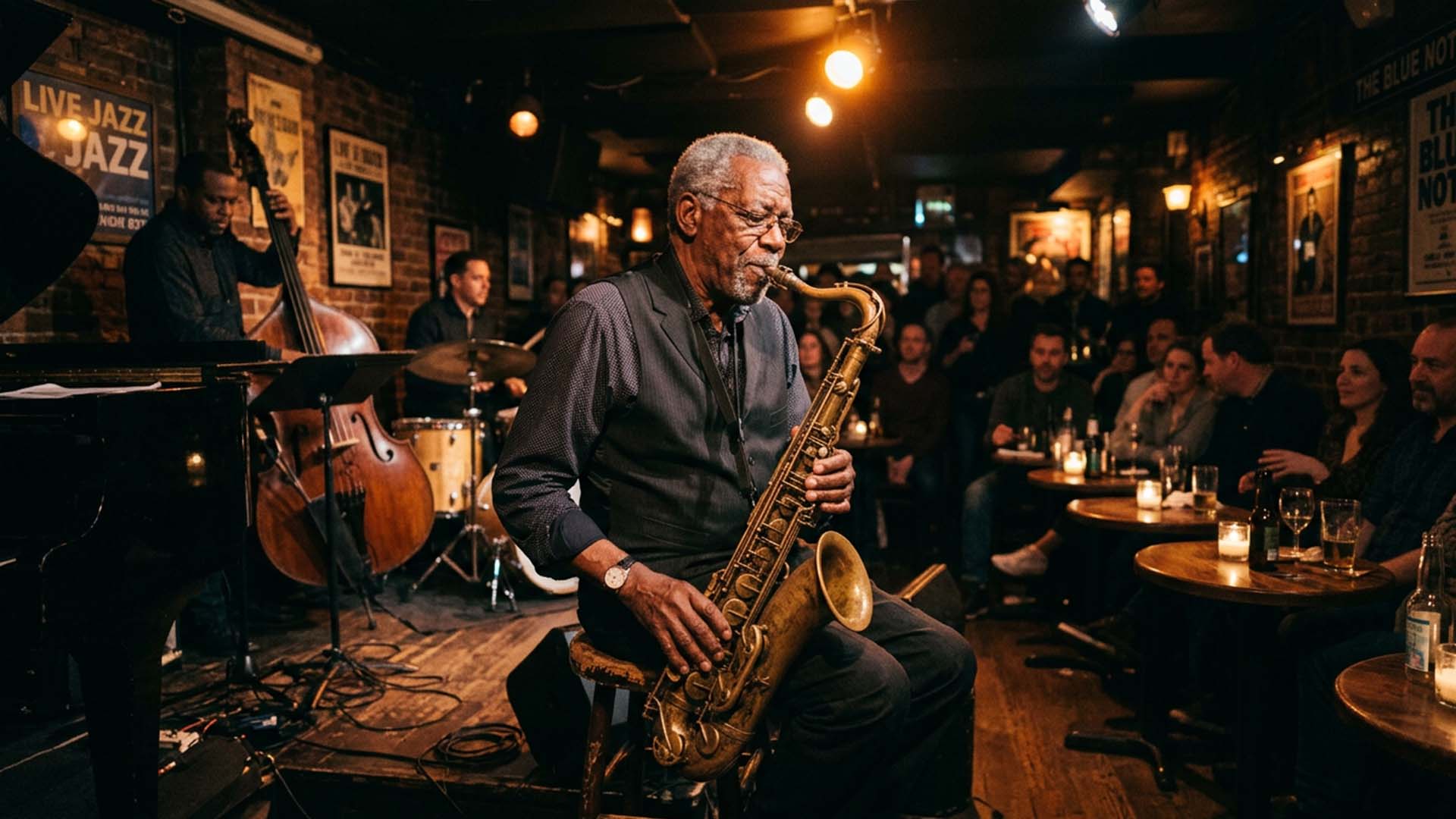
An elderly jazz musician playing tenor saxophone in a small basement jazz club.
Already, the possibilities have narrowed considerably.
We’ve established his age, his instrument and the environment. A small basement club suggests intimacy rather than a concert hall or festival stage. You don’t need to describe everything. Concentrate on details that fundamentally affect the image. Think less like you’re writing a novel, and more like you’re briefing a photographer.
2. Decide where to put the camera
We still haven’t said anything about how we’re seeing him.
Let’s change that:
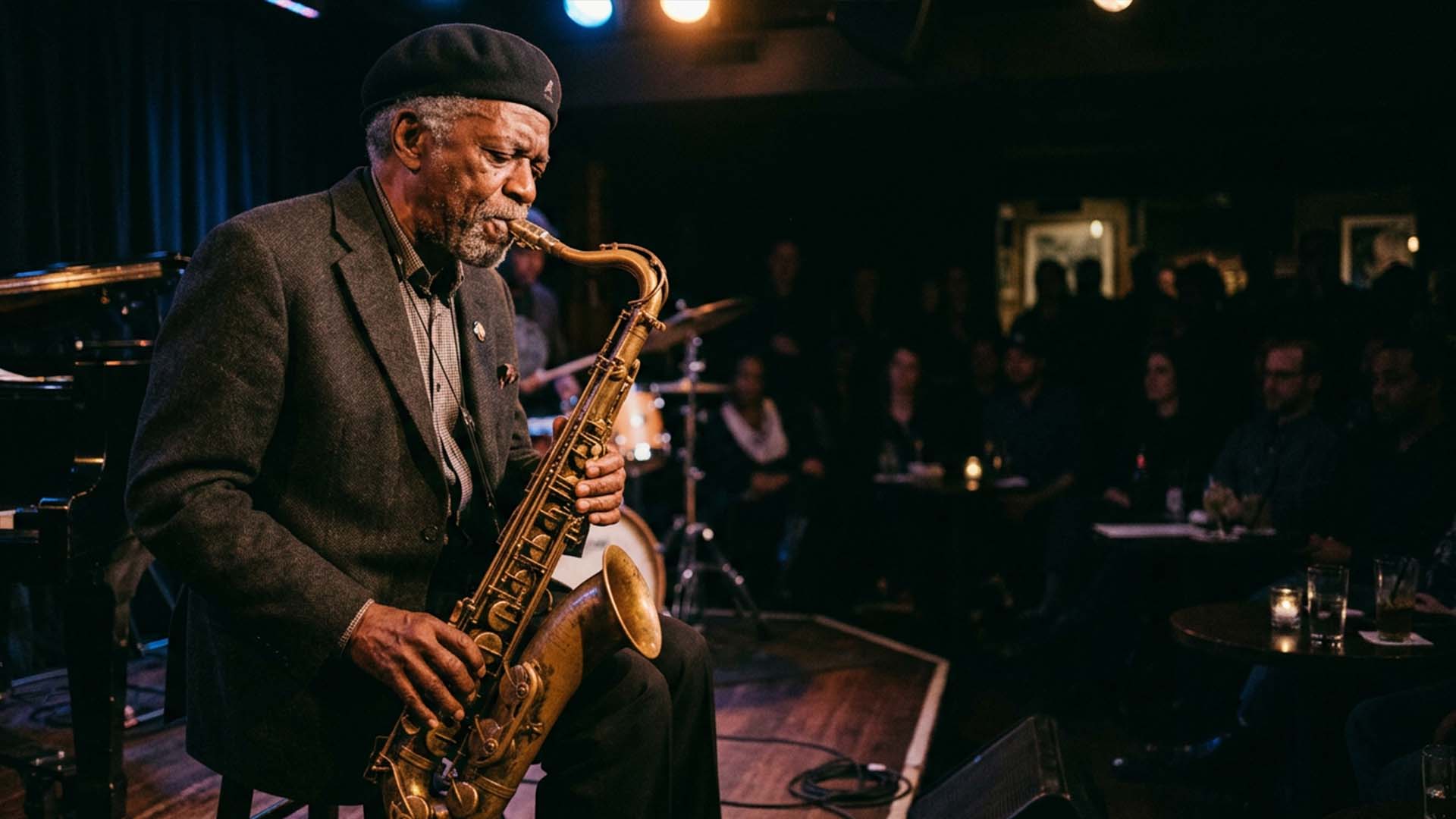
An elderly jazz musician playing tenor saxophone in a small basement jazz club. Medium close-up from slightly below eye level, framed from the chest upwards, musician positioned left of frame with the audience disappearing into darkness behind him.
Now we’re actually starting to direct the shot.
The medium close-up gives us the musician’s expression while retaining enough of the saxophone to understand the performance. A slightly low camera position gives him presence, while the dark audience establishes that he’s performing without distracting from him.
3. Choose a lens
Now let’s introduce some optical characteristics:
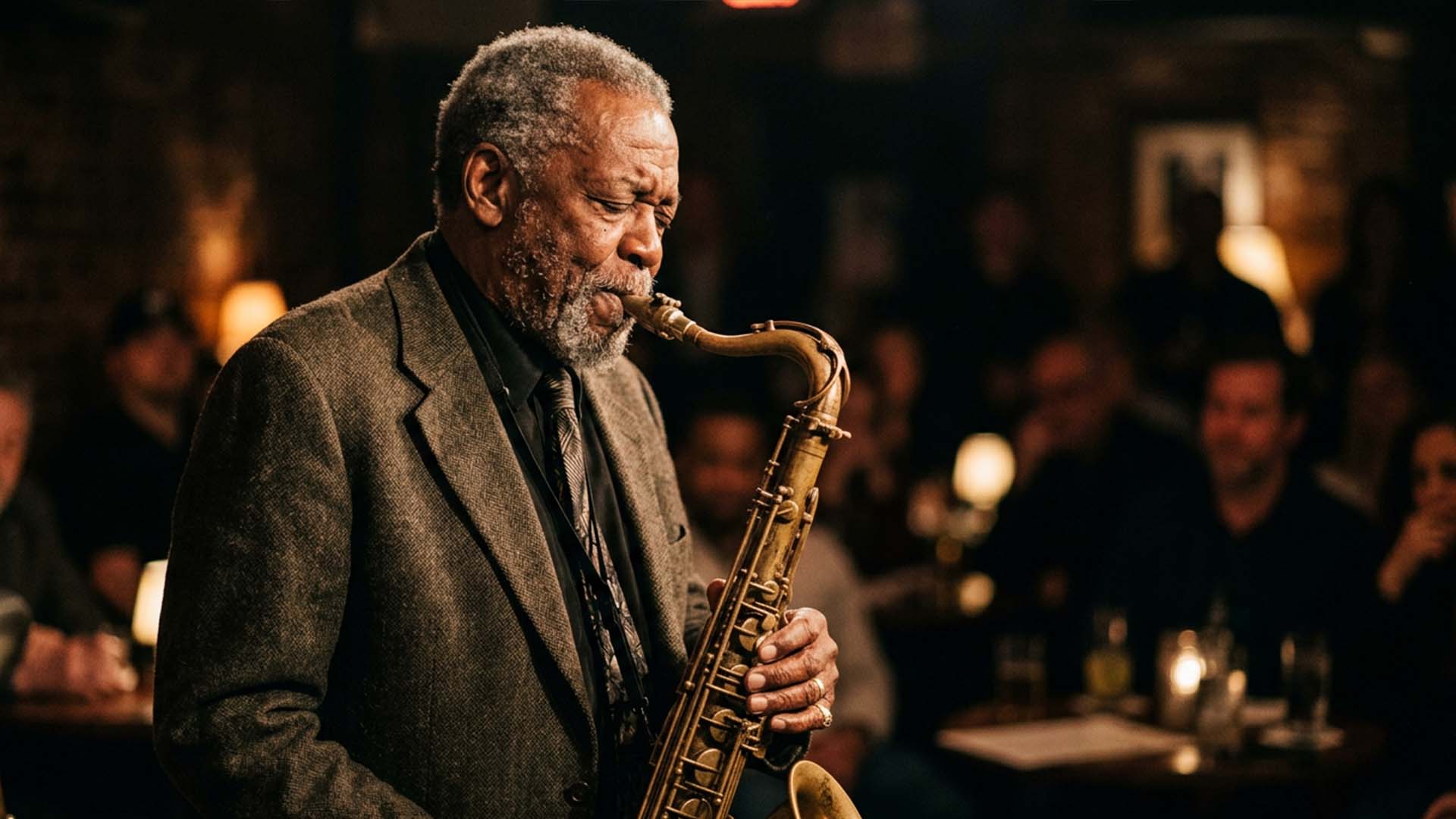
An elderly jazz musician playing tenor saxophone in a small basement jazz club. Medium close-up from slightly below eye level, framed from the chest upwards, musician positioned left of frame with the audience disappearing into darkness behind him. Shot on a 75mm lens at f/1.4, very shallow depth of field.
The longer lens and wide aperture begin isolating our musician from the room.
Instead of simply telling the model “cinematic depth of field”, we’ve described the photographic decisions that would actually create it. Platforms such as Higgsfield AI are particularly interesting for this kind of prompting because its AI image generator is built into a cinematic, and filmmaking platform. It responds more effectively when prompts include technical details such as focal length, aperture, camera characteristics and lenses.
4. Light the scene
This is where our generic jazz image can start developing some personality.
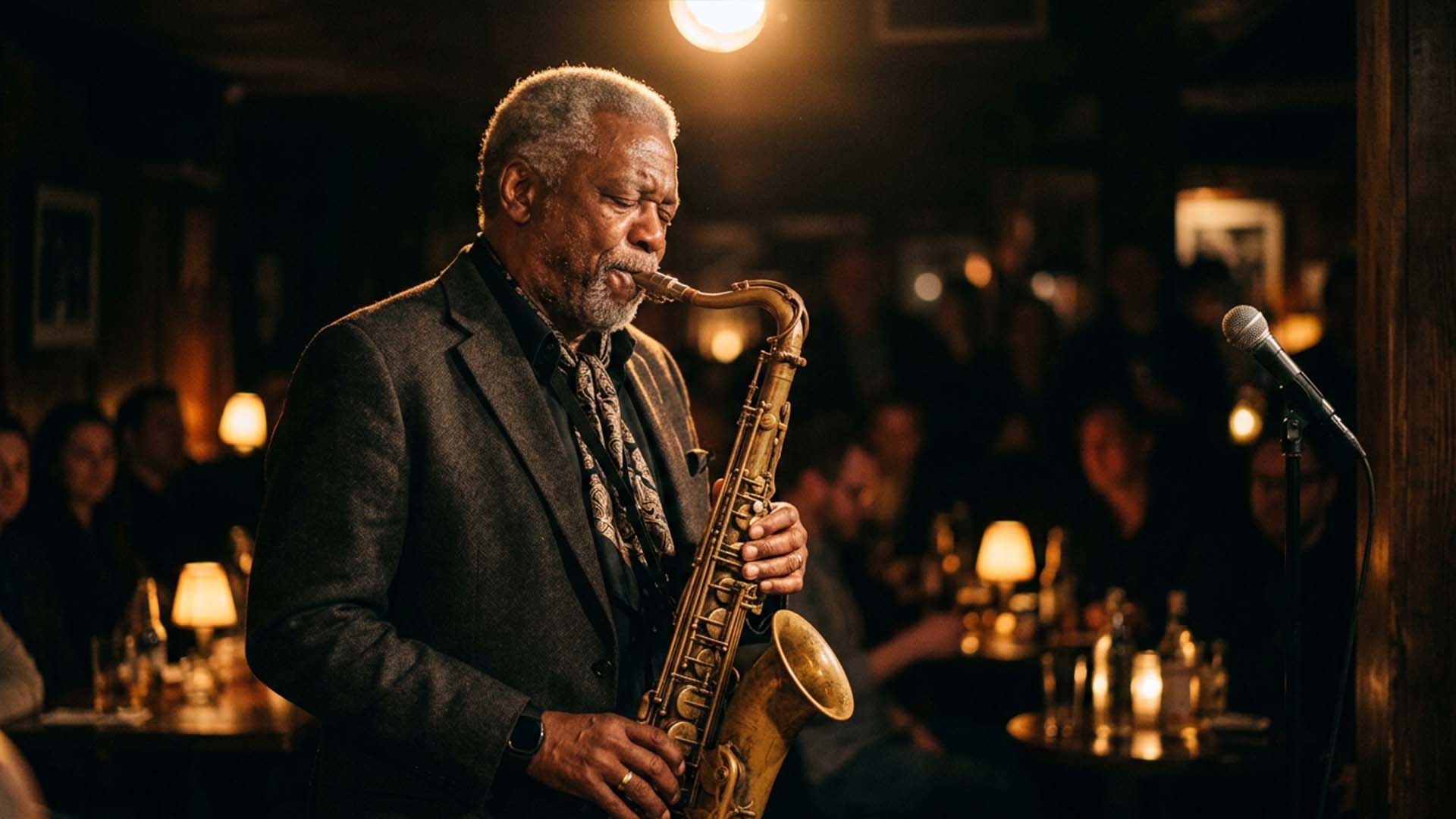
An elderly jazz musician playing tenor saxophone in a small basement jazz club. Medium close-up from slightly below eye level, framed from the chest upwards, musician positioned left of frame with the audience disappearing into darkness behind him. Shot on a 75mm lens at f/1.4, very shallow depth of field. A warm tungsten spotlight from above and behind catches the musician’s face and shoulders, with soft amber practical lights glowing in the background.
That’s considerably more useful than simply writing dramatic cinematic lighting.
We’ve described where the key light comes from, its colour and how it interacts with the subject. We’ve also introduced practical lights into the background to create separation and depth.
5. Add atmosphere
Jazz clubs give us a perfect excuse to start introducing texture.
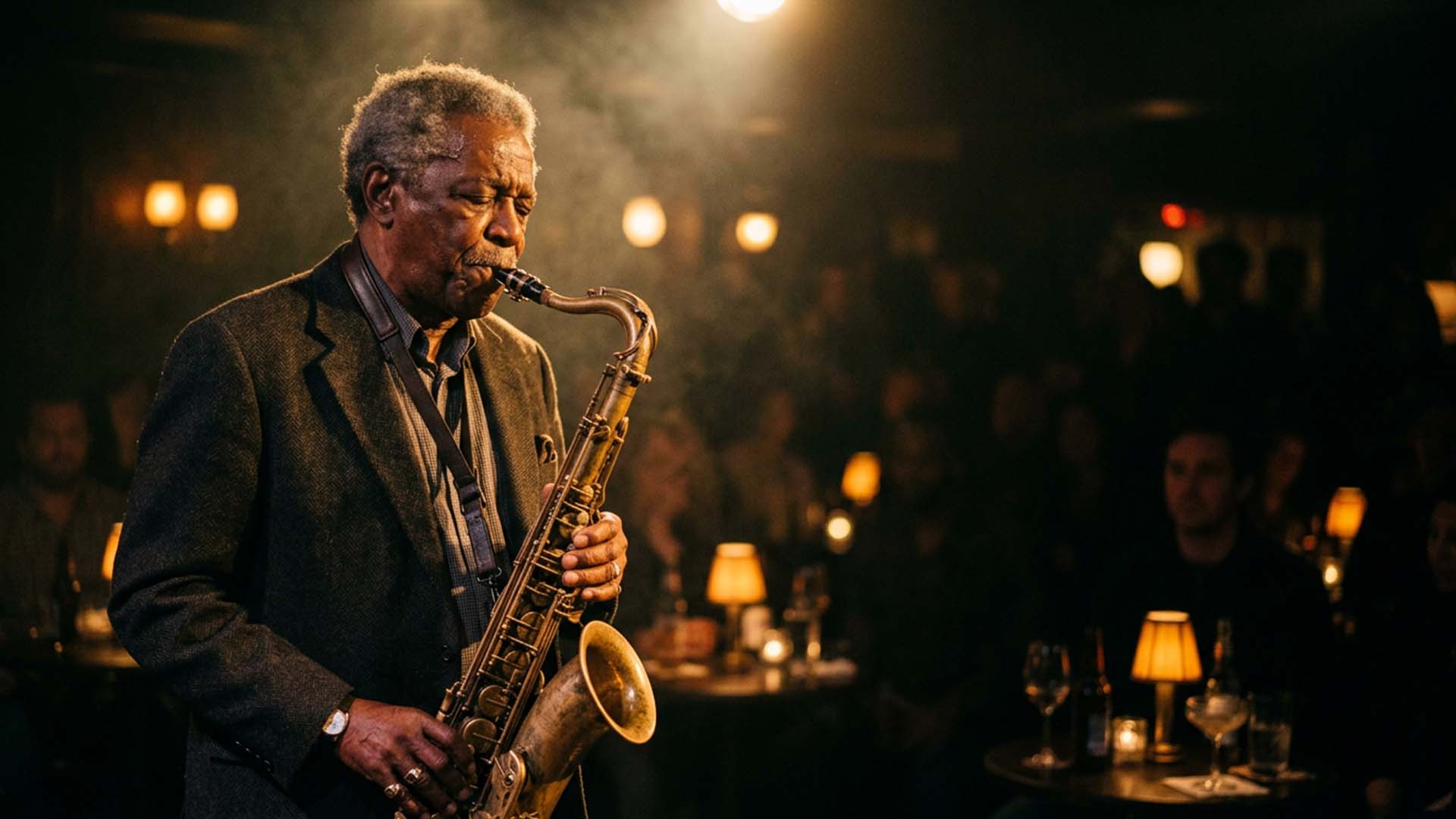
An elderly jazz musician playing tenor saxophone in a small basement jazz club. Medium close-up from slightly below eye level, framed from the chest upwards, musician positioned left of frame with the audience disappearing into darkness behind him. Shot on a 75mm lens at f/1.4, very shallow depth of field. A warm tungsten spotlight from above and behind catches the musician’s face and shoulders, with soft amber practical lights glowing in the background. A slight haze hangs in the air, catching the backlight around his silhouette. Brass reflections shimmer across the saxophone, while indistinct glasses and tables create soft bokeh behind him.
We’re not really changing the subject anymore, we’re changing the world around him.
Haze gives the light something to interact with. Reflections bring the saxophone to life. Background tables and glasses suggest a real venue without competing for attention.
6. Give it a visual language
Only now would I start defining the overall aesthetic.
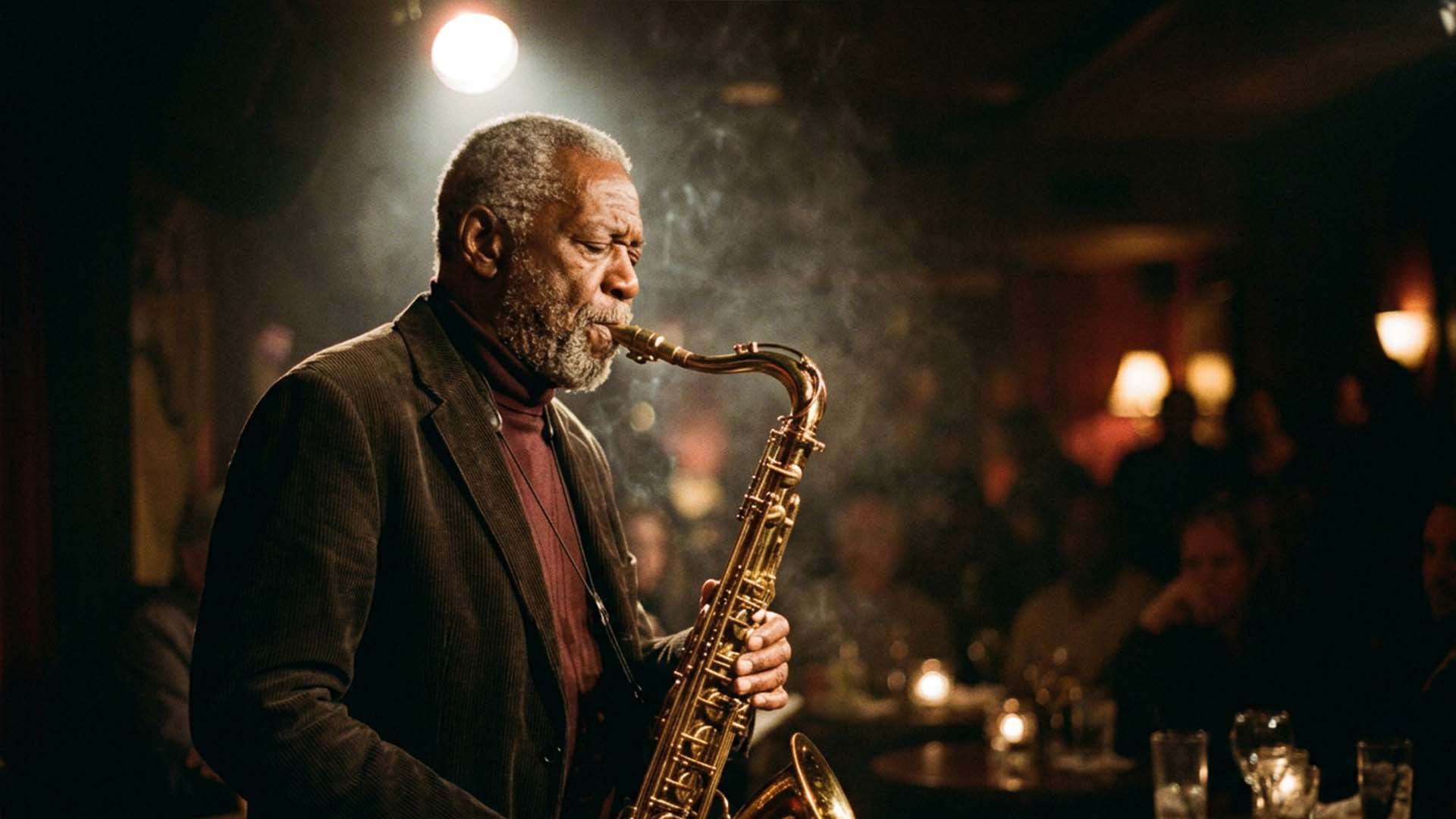
An elderly jazz musician playing tenor saxophone in a small basement jazz club. Medium close-up from slightly below eye level, framed from the chest upwards, musician positioned left of frame with the audience disappearing into darkness behind him. Shot on a 75mm lens at f/1.4, very shallow depth of field. A warm tungsten spotlight from above and behind catches the musician’s face and shoulders, with soft amber practical lights glowing in the background. A slight haze hangs in the air, catching the backlight around his silhouette. Brass reflections shimmer across the saxophone, while indistinct glasses and tables create soft bokeh behind him. Shot on pushed 35mm film, pronounced organic grain, rich blacks, warm halation around highlights, restrained colour palette, intimate late-night jazz documentary aesthetic.
Now we’ve given the model a photographic language.
7. Give the image a story
Finally, let’s make it about something more than a cool-looking jazz musician.
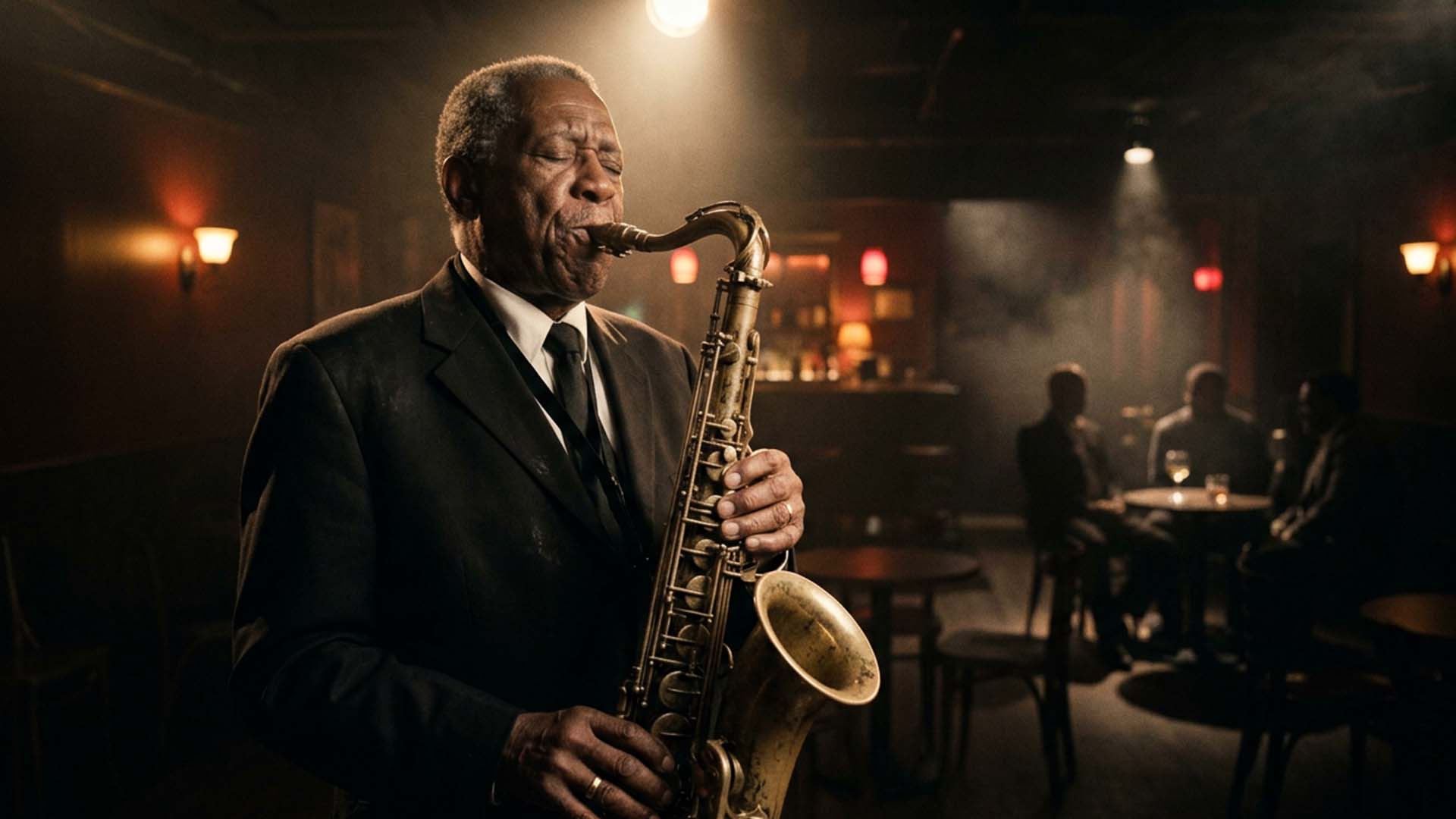
An elderly jazz musician in his late 70s playing tenor saxophone to an almost empty basement jazz club after midnight. His eyes are closed as he plays, his worn black suit slightly too large around his shoulders, an old wedding ring visible on his left hand. Medium close-up from slightly below eye level, framed from the chest upwards, musician positioned left of frame. Only three audience members remain, barely visible in the darkness behind him. Shot on a 75mm lens at f/1.4, very shallow depth of field. A warm tungsten spotlight from above and behind catches the musician’s face and shoulders, with soft amber practical lights glowing in the background. A slight haze hangs in the air, catching the backlight around his silhouette. Brass reflections shimmer across the worn saxophone. Shot on pushed 35mm film, pronounced organic grain, rich blacks, warm halation around highlights, restrained colour palette, intimate late-night jazz documentary aesthetic.
Now the details suggest something. Why is the club nearly empty? How long has he been playing there? What’s the significance of the wedding ring? Is this just another Tuesday night, or his final performance?
None of that needs to be explained in the prompt. In fact, it’s better if it isn’t.
We’ve gone from:
A jazz musician playing saxophone, to something that could conceivably be a shot from a film.
And that’s ultimately the useful distinction when prompting AI imagery for filmmaking. Don’t just describe what you want the model to draw.